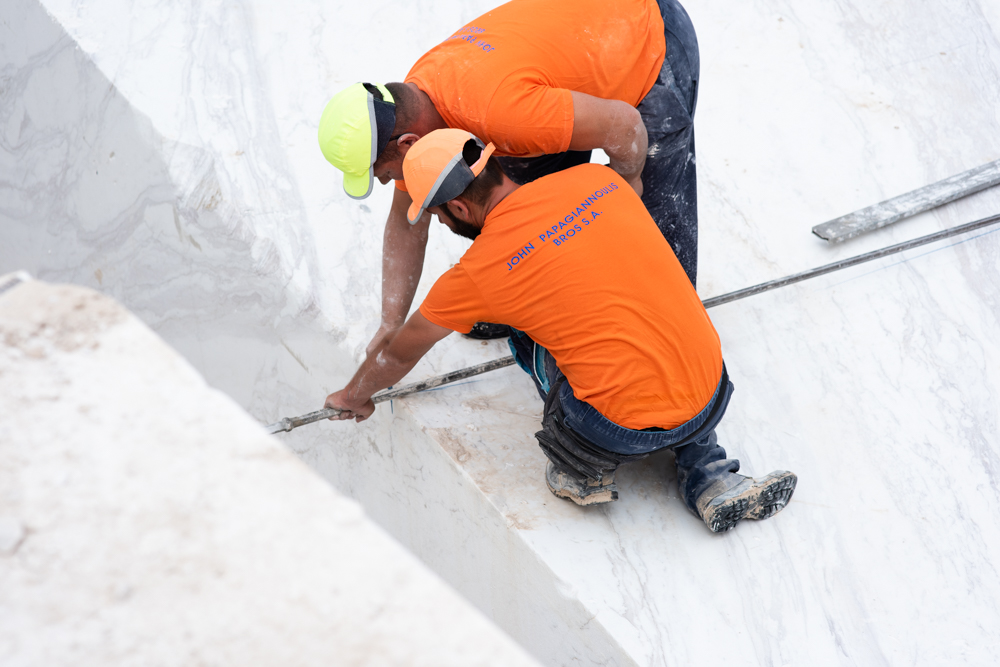
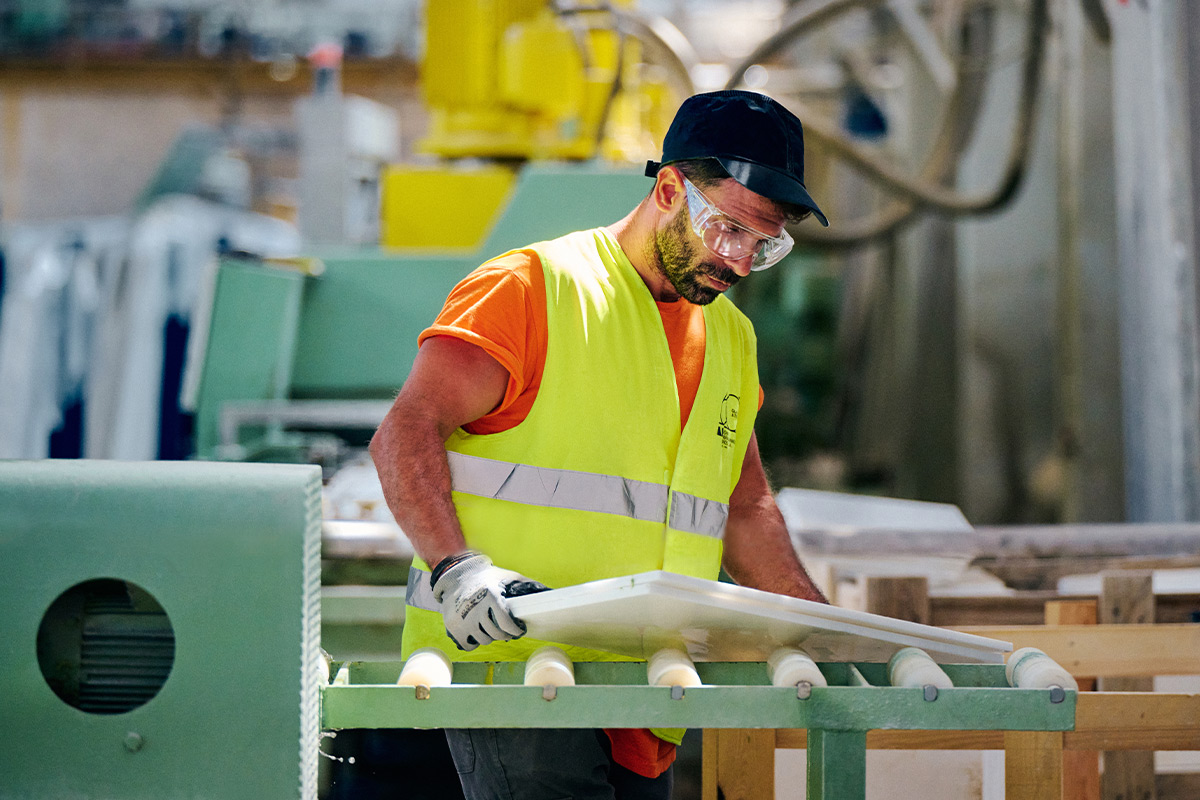
The finished marble surface is the part everyone sees. The work that makes it possible usually happens much earlier — in drawings, measurements, slab selection, cutting sequences, reinforcement, finishing and repeated checks before anything leaves the factory.
Custom marble fabrication starts with translation. Architectural drawings have to become individual pieces, each with clear dimensions, thicknesses, edge details, openings and finish requirements. When a project includes several rooms or repeated elements, coding and sequencing become just as important as cutting. A small mistake in one reference can affect installation much later.
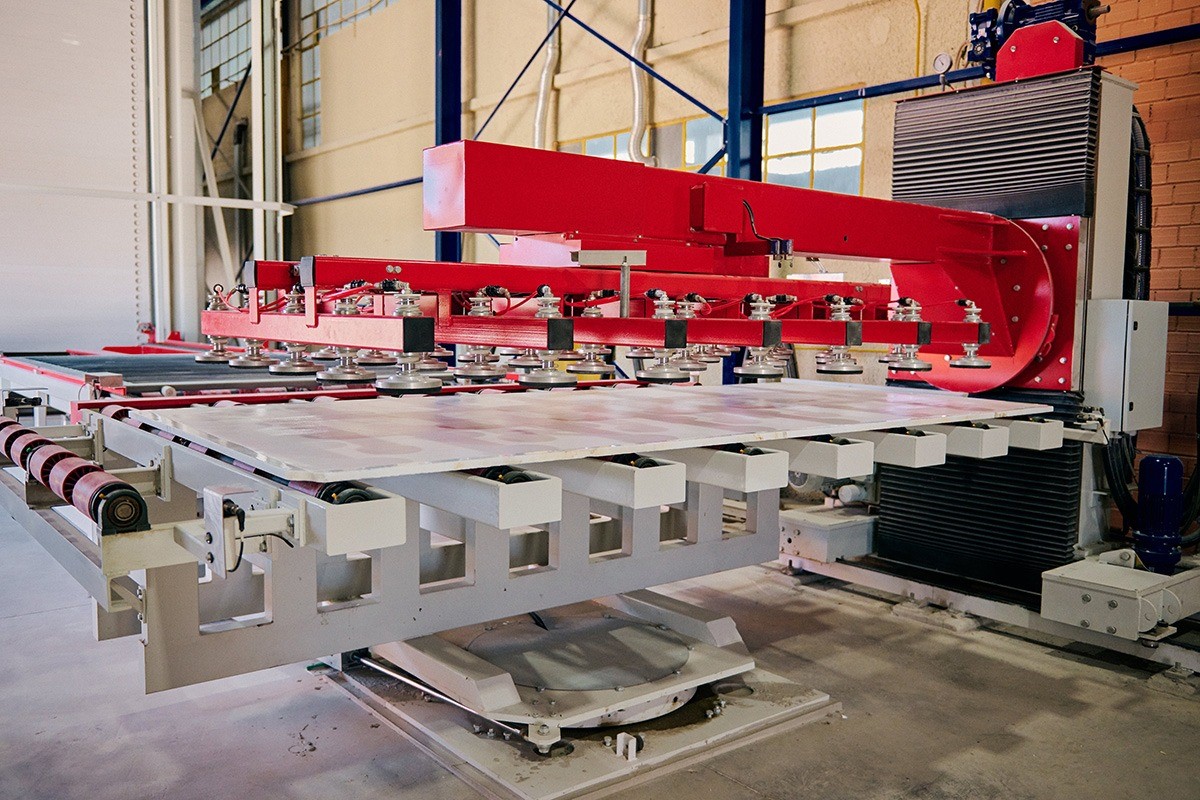
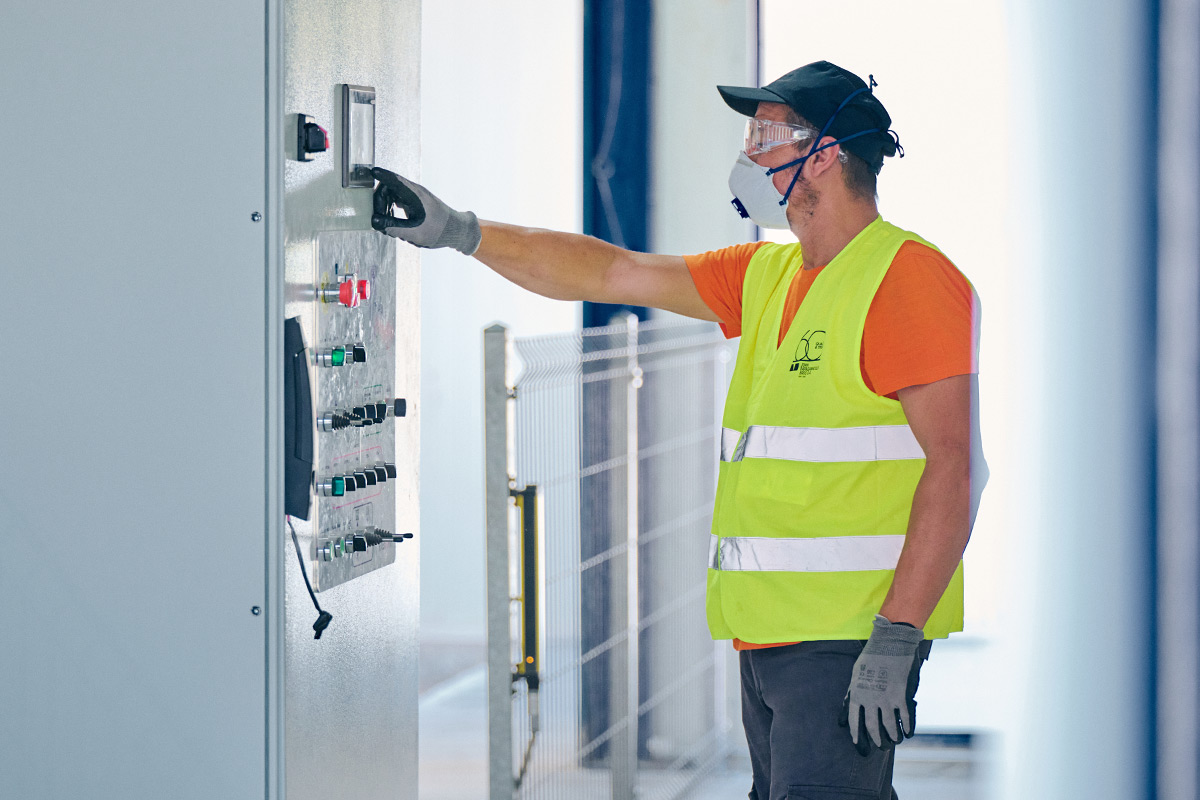
Technology provides accuracy, but fabrication is not an automated process from beginning to end. Operators still need to understand the stone in front of them: where the veins run, where a natural feature sits, how a piece should be supported and whether the proposed cut makes sense for the material. This combination of machinery and judgement is central to working with natural stone.
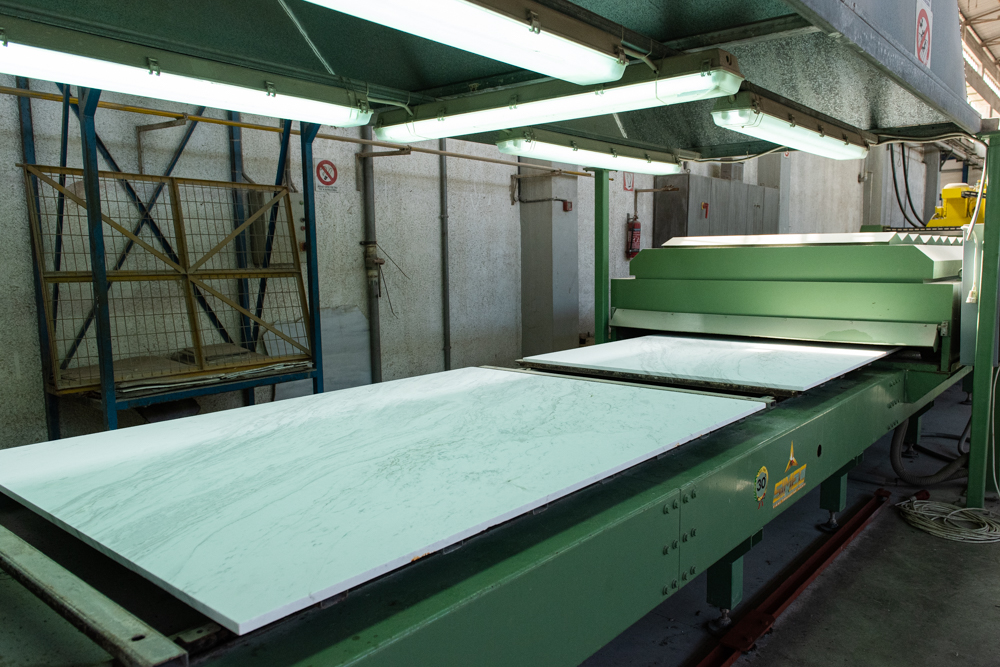
Finishing adds another layer of precision. Polished and honed surfaces need consistency across related pieces; edges and mitres have to meet cleanly; reinforced elements must remain stable through handling and transport. For bespoke work, dry layouts and quality checks can help identify issues before the pieces are packed.
By the time marble reaches site, much of the most important work should already be invisible. Good fabrication is not about making the process look complicated. It is about resolving complexity early, so that the final stone feels simple, intentional and exactly where it belongs.