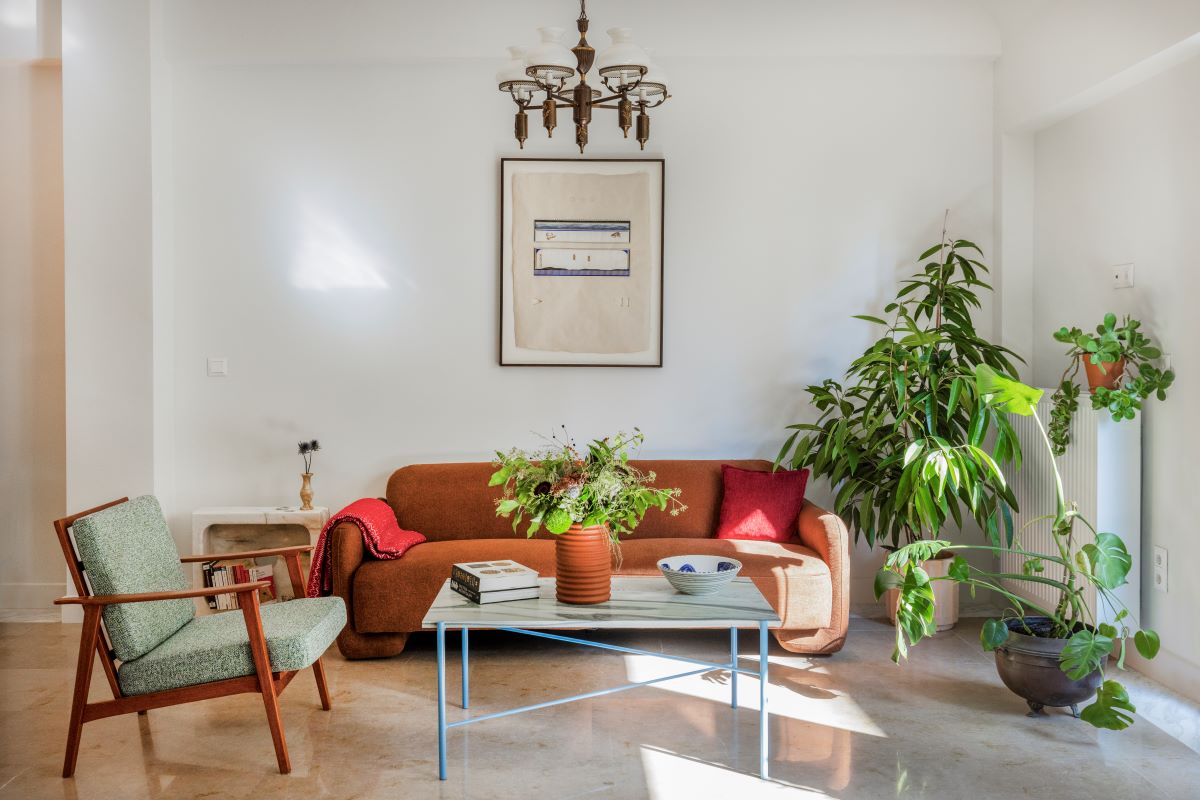
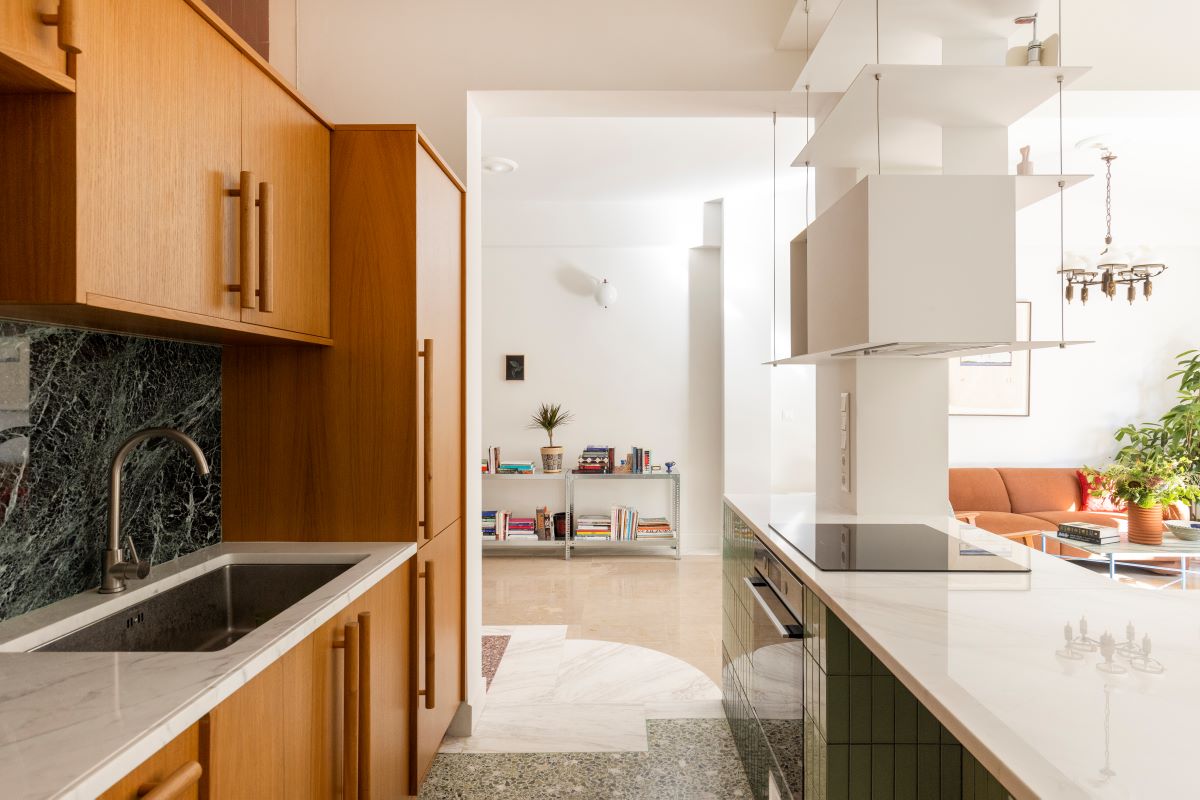
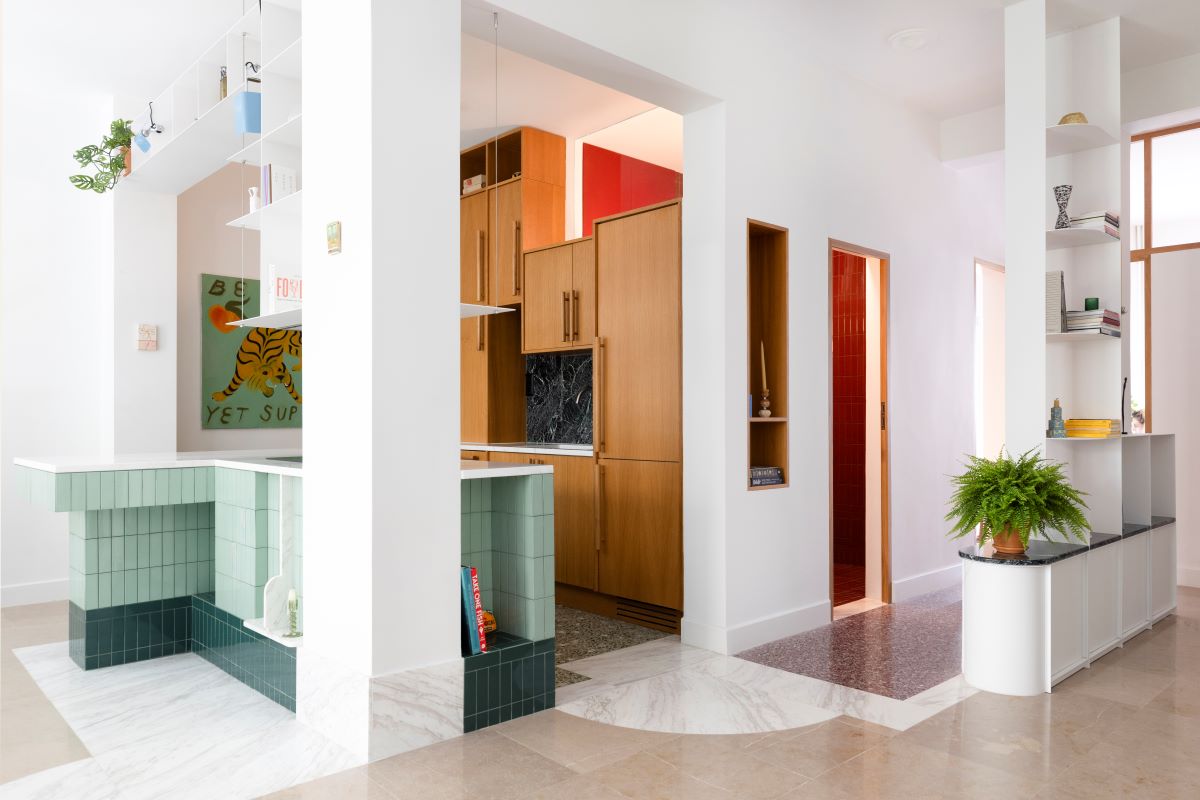
Marble is often selected from a small sample or viewed under controlled showroom lighting. Once installed, however, the stone becomes part of a constantly changing environment. Morning light, strong midday sun and warmer evening tones can make the same surface appear crisp, soft, cool or richly textured.
The finish plays an important role in this transformation. A polished surface reflects light more clearly and can intensify colour and veining, while a honed finish diffuses light and creates a quieter, more velvety appearance. On a brilliant white marble such as Thassos, daylight can emphasise its crystalline brightness. On a veined stone such as Volakas, shifting shadows reveal the direction and rhythm of the pattern.
For architects and designers, this means that marble should be considered together with the orientation of the room, the size of the openings and the surrounding materials. A slab placed near a large window may become the brightest element in the space, while the same stone under indirect light can feel calmer and more architectural.
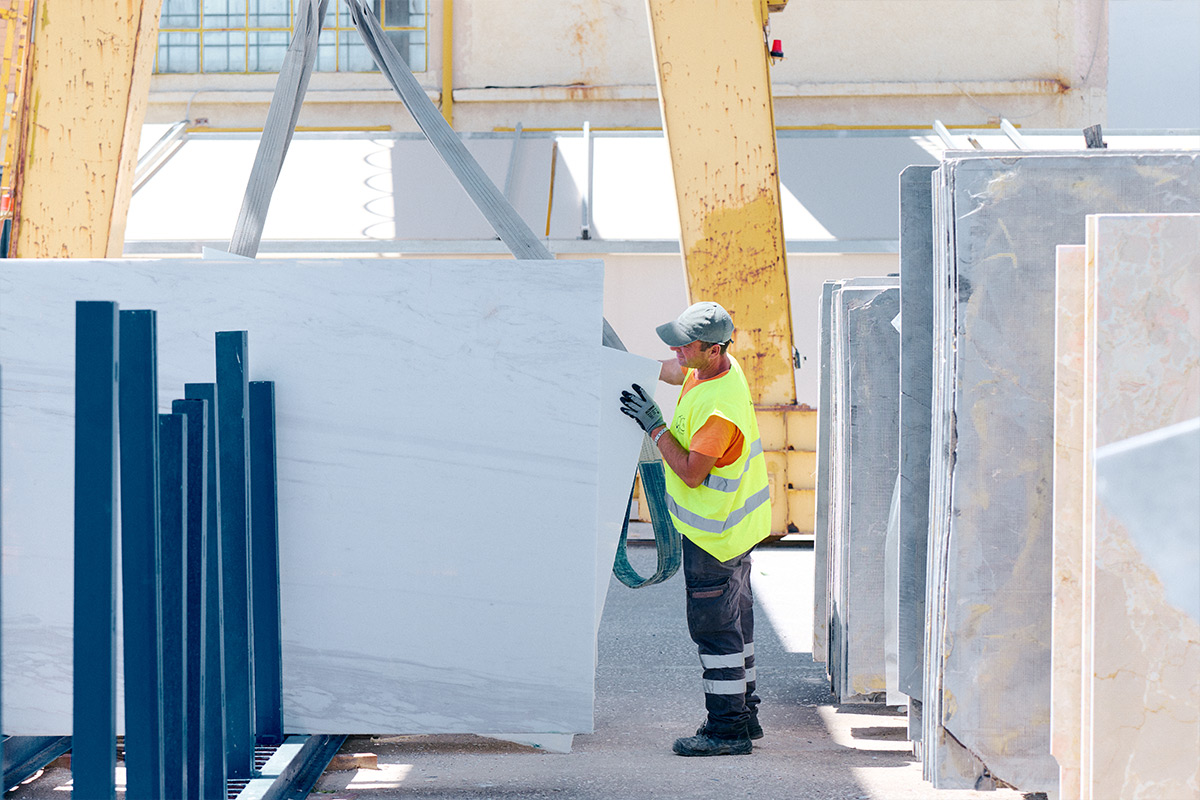
Viewing full slabs in natural light whenever possible is therefore an important part of material selection. Finish samples, photographs taken at different times of day and a dry layout before installation can help anticipate how the final composition will behave.
Marble does not remain visually static. It responds to the hour, the season and the atmosphere around it. This ability to change without losing its identity is one of the qualities that makes natural stone feel alive — and ensures that a marble interior continues to reveal something new over time.