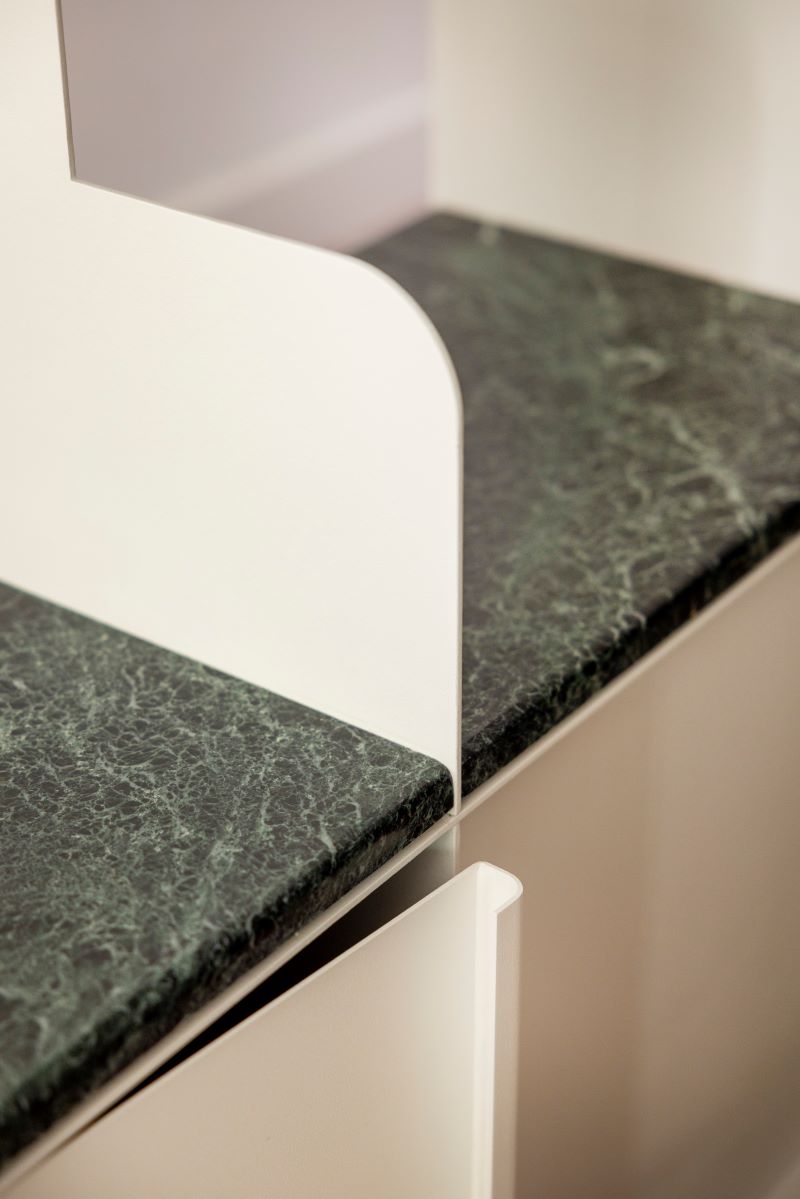
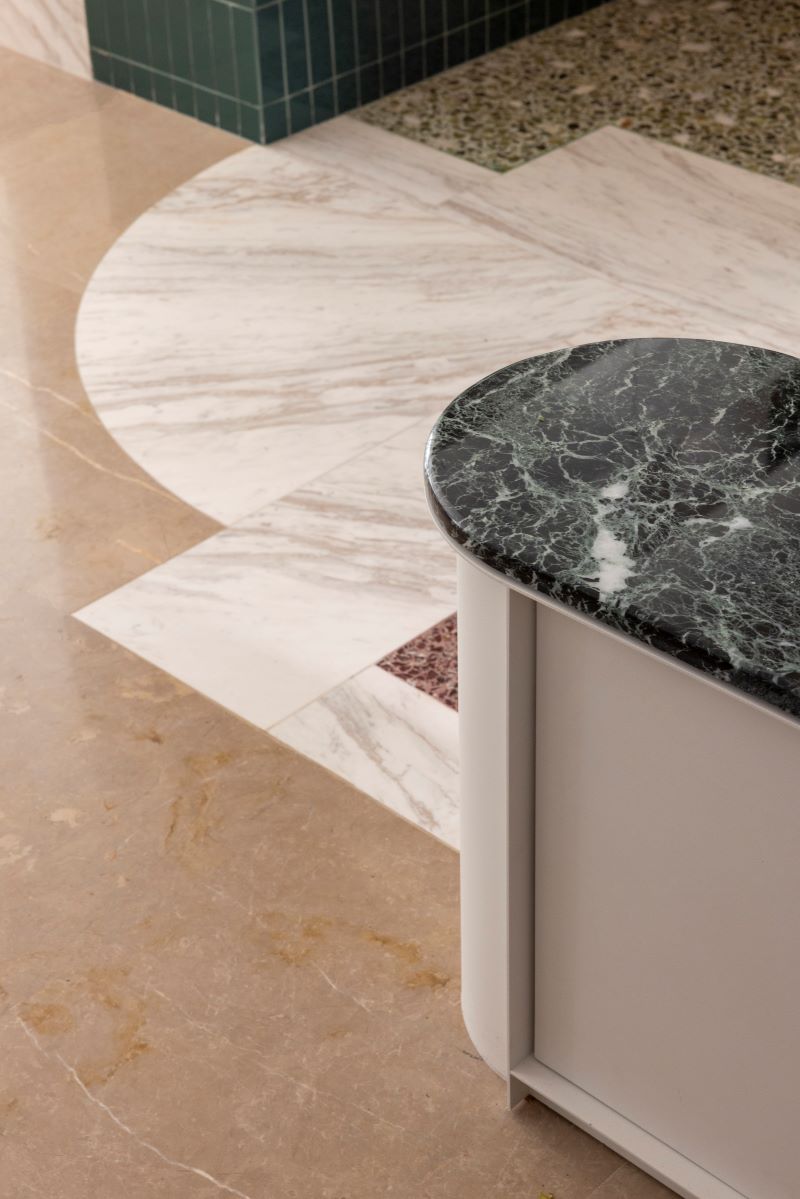
An edge is one of the smallest elements in a marble design, yet it strongly influences how the entire surface is perceived. It can make a countertop feel light or substantial, a table feel soft or architectural, and a vanity appear minimal or sculptural.
A simple eased edge preserves the clean geometry of the slab and suits contemporary interiors. A rounded or bullnose profile introduces softness, both visually and to the touch, making it particularly effective on furniture, bars and high-contact surfaces. A bevel or chamfer creates a fine shadow line that sharpens the outline of the stone.
Mitred construction offers another possibility. By joining separate pieces at an angle, a relatively thin slab can be made to appear like a deeper, monolithic block. The effect can be striking, but it requires careful fabrication, accurate joints and thoughtful continuation of the veining.
The right profile should never be selected in isolation. It needs to respond to the application, the desired thickness, the supporting structure, the direction of the pattern and the way people will interact with the surface. A dramatic marble may benefit from a quiet edge, while a more uniform stone can gain character through a curved or more expressive detail.
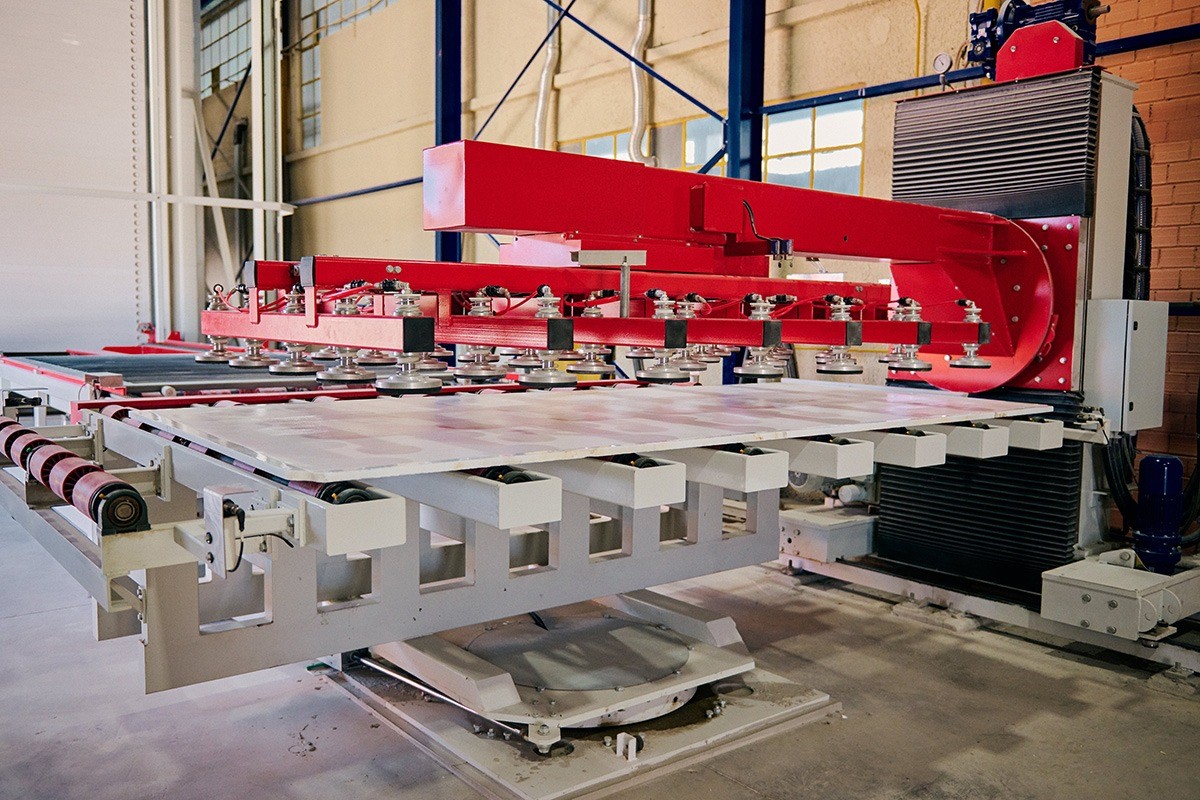
Because edge treatments affect cutting, finishing, reinforcement and installation, they should be defined early in the design process. Close collaboration between designer, fabricator and installer allows the material to be resolved as a complete composition rather than as a surface added at the end.
In marble, precision is often most visible in the details. A carefully considered edge becomes the final line of the design — subtle, tactile and essential.