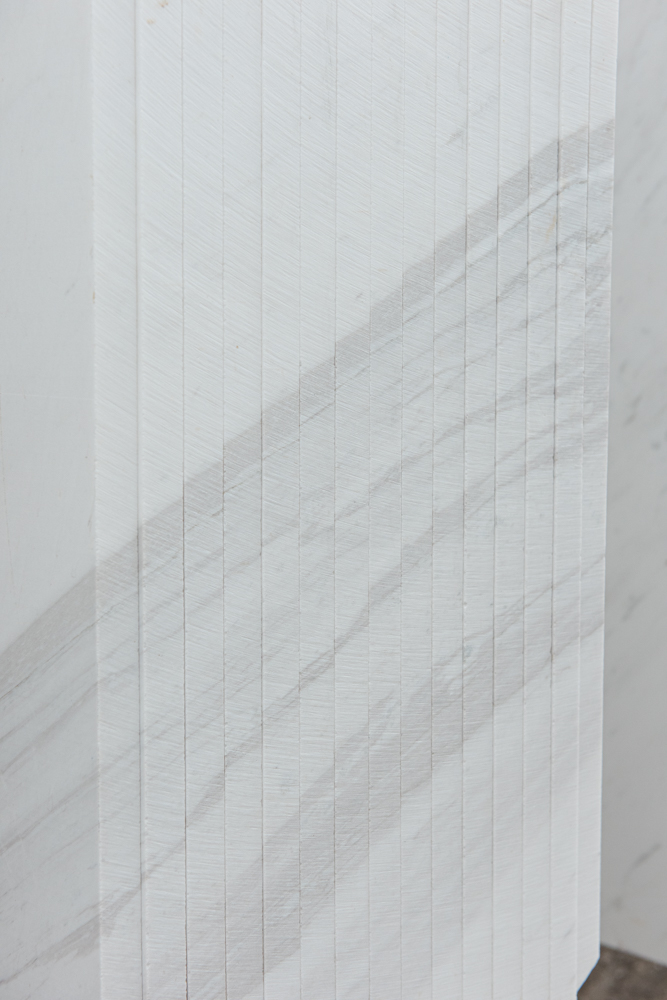
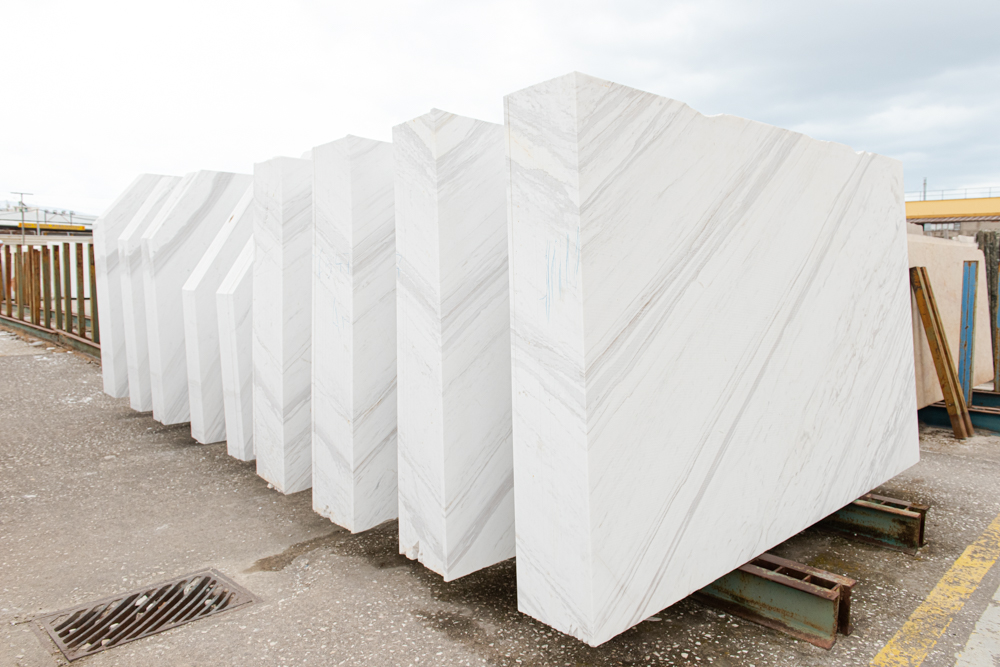
Marble is often described through colour: white, grey, green, red. But in a finished space, direction can be just as important as tone. The movement of a vein guides the eye across a surface, creating a sense of length, height, calm or energy depending on how the stone is cut and positioned.
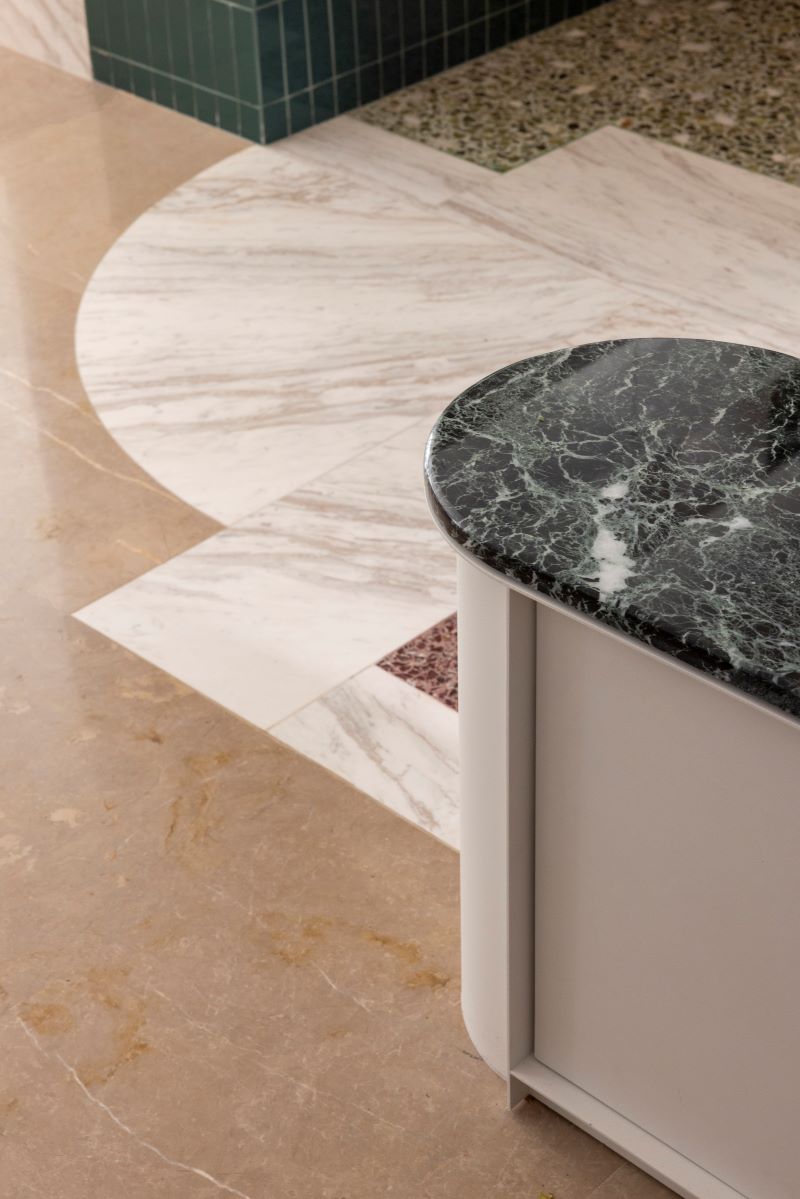
This becomes especially important with strongly veined marbles. A slab placed vertically can emphasise height; the same slab turned horizontally may make a wall or counter feel longer. On floors, repeated directional movement can subtly lead people through a space. On furniture or joinery, the orientation of the vein can either reinforce the geometry or deliberately work against it.
The decision is not simply decorative. Vein direction needs to be considered alongside slab size, cut dimensions, joints and the relationship between neighbouring pieces. For larger surfaces, designers may choose continuity from one slab to the next, a book-matched composition, or a more irregular arrangement that celebrates natural variation.
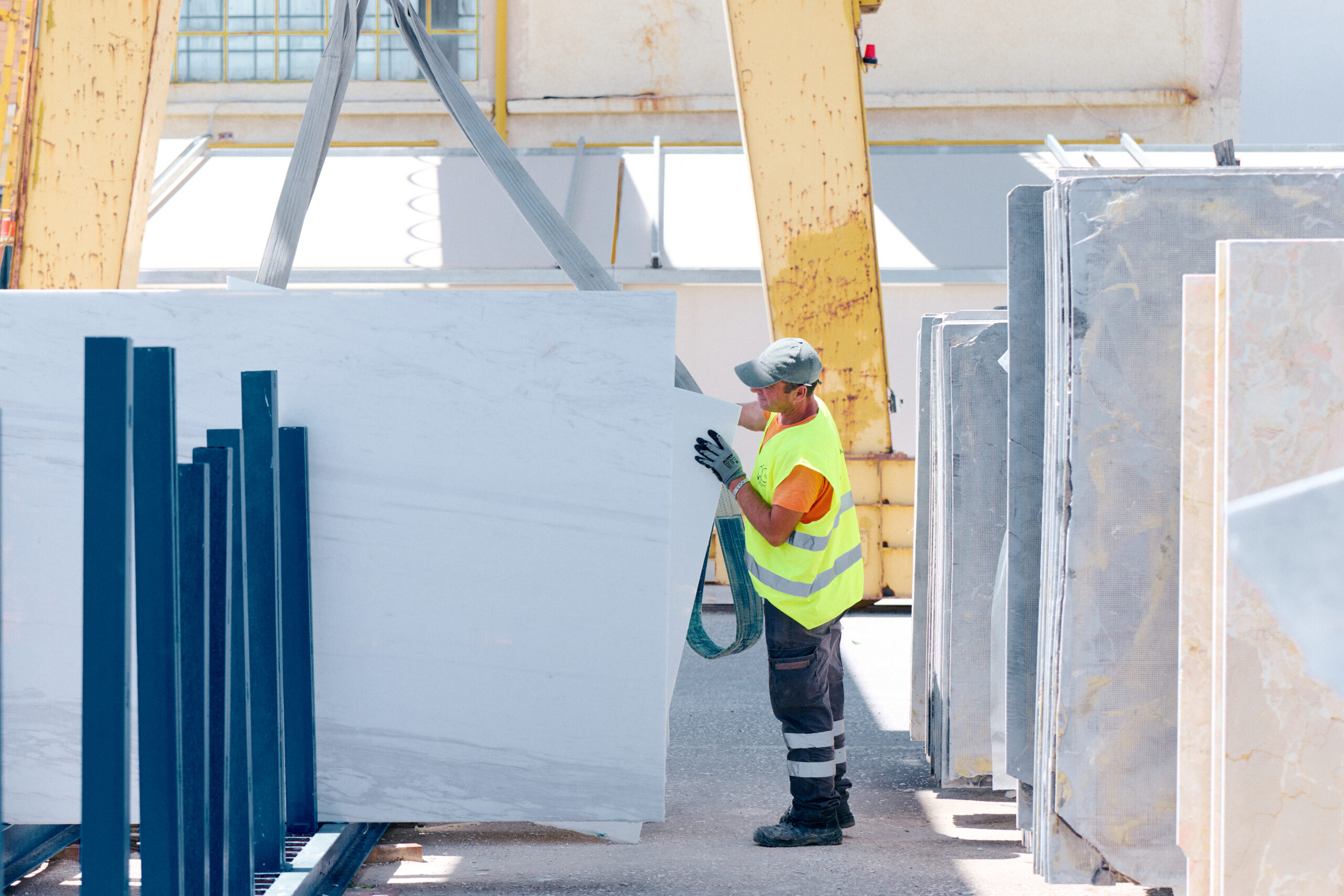
This is why selecting marble from a small sample has its limits. Full slabs reveal the scale and rhythm of the pattern, making it easier to plan how the stone will behave once divided into architectural elements. A dry layout before final fabrication can also help confirm the sequence and direction of key pieces.
Natural stone already contains movement before the designer begins. The skill lies in reading it — and deciding whether the architecture should follow that movement, balance it or create a deliberate contrast. When direction is considered early, veining becomes more than a visual feature. It becomes part of the design itself.